

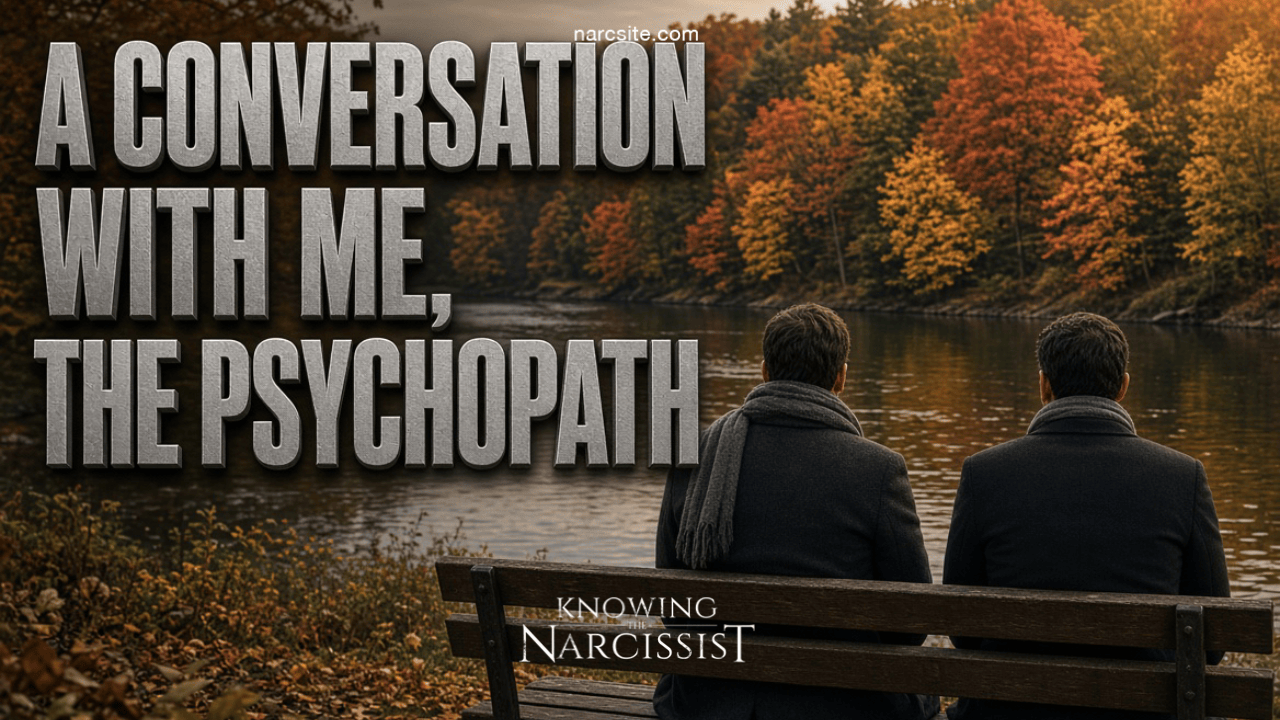
I had been watching the way his fingers worried the edge of the paper cup for nearly a minute before I spoke. The bench faced the river; the current moved without urgency. He sat with the careful posture of someone who expected the afternoon to remain ordinary.
“Most people treat their own attention as if it were a private room,” I said. “They assume the door stays shut simply because they have not opened it.”
He turned. The surprise was brief, then polite. “I’m sorry?”
“The cup.” I nodded toward it. “You’ve rotated it four times. Each time the seam faces a different direction. You’re not deciding anything. You’re only confirming that the object remains under your hand.”
He looked down and said. “Nervous energy, I guess. Long week.”
“Energy is never only nervous.” I kept my voice low enough that the water covered the edges of the words. “It is the body rehearsing an exit it has not yet been given permission to take. You already know the conversation you are in will not satisfy you. The rotation is the proof.”
His smile thinned. He did not stand. That was the first useful fact.
“I’m not sure I follow.”
“You do.” I watched a leaf detach from the far bank and ride the surface until the current turned it. “Follow the leaf. It does not negotiate with the water. It does not invent a reason the water should spare it. Most of what you call thought is the invention of those reasons. The leaf has none, and so it travels farther than any argument you could construct in its defense.”
He shifted. The cup stilled. “That’s a bleak way to put it.”
“Bleak is a measurement taken from inside the invention. Step outside it and the leaf is only doing what water permits. The same is true of the reasons you give yourself for staying on this bench. You could stand. The path is clear in both directions. Yet you remain, because the story you are currently telling requires an audience that has not yet disappointed you.”
A muscle moved along his jaw. He glanced once toward the path, then returned his eyes to me, as if looking away would concede something he did not wish to name.
“You don’t know what story I’m telling.”
“I know the shape of the ones that keep a person seated after the first discomfort arrives.” I rested my hands on my knees, open, ordinary. “They begin with the belief that attention is neutral. It is a useful belief. It lets you enter rooms. It does not survive contact with anyone who has stopped performing the belief for your benefit.”
He exhaled through his nose. The sound was short. “You’re saying you’re not performing.”
“I’m saying the performance has a cost most people never itemise. Every nod, every softening of the voice, every decision to let a silence remain comfortable—these are withdrawals against a balance you cannot see. When the balance reaches zero, the face you are wearing ceases to answer when you call it. You continue the motions. The account is already closed.”
The river made its small, constant sound. He turned the cup once more, then stopped himself, fingers tightening. I noted the correction.
“That sounds like something a person says when they want to unsettle someone.”
“It is also something a person says when they have watched the account close in others and measured the interval between the closing and the moment the person notices.” I tilted my head a fraction, the way one does when offering a confidence.
“The interval is longer than you expect. People will describe their own emptiness to you in detail if you give them the correct vocabulary and then remain quiet. They believe they are being understood. What they are doing is handing you the map of the rooms they can no longer enter.”
He was very still. The politeness had left his posture; what remained was the narrower attention of someone calculating distance.
“Why tell me this?”
“Because you rotated the cup.” I let the corner of my mouth move, not quite a smile. “And because the leaf is already out of sight. You are still here, which means the story has not yet failed you completely. The first stage is the suspicion that the person across from you is not collecting the same details you are collecting. The second is the discovery that they were never collecting details for the purpose of keeping you comfortable.”
A runner passed behind us. Neither of us turned. His breathing had changed its interval; the inhale arrived later than the exhale required.
“You’re enjoying this,” he said.
“Enjoyment is another invention. I am noting the points at which your attention snags. The jaw. The decision not to look at the path. The way you have begun to hold the cup as if it might be taken. These are not accusations. They are measurements. A person who has never been measured while remaining seated often mistakes the sensation for threat. It is only information arriving without the usual delay.”
He set the cup on the bench between us. The gesture was meant to free his hands. It also placed an object in the space he would have to cross if he stood.
“I think I should go.”
“You can.” I did not move.
“The path has not changed. What has changed is your certainty that leaving will restore the privacy you assumed you still possessed when you sat down. You will carry the measurements with you. Later, when you rehearse the conversation, you will discover that several of the sentences you believed you spoke were only rehearsed. The ones you actually spoke were shorter. That discrepancy is the beginning of the closed account. Most people require three or four such conversations before they stop offering strangers the map. You may require fewer. You have already stopped rotating the cup.”
He stood. The motion was controlled, but the control arrived a half-second late. He looked at the river once, then at me.
“You’re describing yourself,” he said. “Not people in general.”
“The distinction is less stable than the sentence requires.” I watched him decide whether to take the cup. He left it. “When you reach the end of the path, count the number of times you check whether anyone is following. The number will be higher than the occasion warrants. That excess is not fear of me. It is the ordinary mind discovering, briefly, how much of its day has been spent confirming that no one is performing the act of looking with accuracy. The confirmation usually fails. Today it did not. You will try to restore it by telling the story differently to the next person who asks how your afternoon was. The restoration will be partial. Partial restorations are how the rooms empty.”
He walked. I remained. The cup sat where he had placed it, seam turned toward the water. After a while the leaf’s absence became ordinary again, and the current continued its work on whatever else had entered it without negotiation.
The separation required no decision. I decided to follow him.